GPhC-Registered ~ Free UK delivery over £50


What is Altitude Sickness?
Altitude sickness (Acute Mountain Sickness or AMS) can occur when ascending to high altitudes—typically above 2,500 to 3,000 metres—too quickly. As altitude increases, atmospheric pressure drops, meaning fewer oxygen molecules are inhaled with each breath. Your body needs time to adapt to these lower oxygen levels. Without proper acclimatisation, altitude sickness can cause dizziness, headaches, nausea, and severe fatigue, potentially disrupting your trek or mountain holiday.
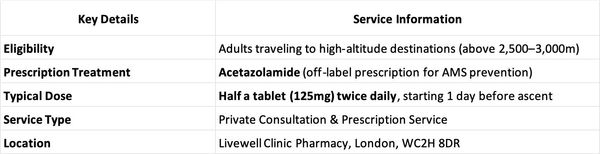
At Livewell Clinic Pharmacy, we offer a convenient private consultation service at our Soho, London clinic to provide preventive treatment (Acetazolamide) and expert travel advice to help your body adapt smoothly to high elevations.
Why prepare for ?
-
Planning ahead ensures altitude sickness does not ruin your trip or compromise your health:
-
Accelerate Acclimatisation: Helps your body adjust more rapidly to lower oxygen availability at high altitudes.
-
Reduce Symptoms: Significantly lowers the risk of developing altitude-induced headaches, nausea, dizziness, and shortness of breath.
-
Safer Ascent: Allows you to enjoy high-altitude activities, such as trekking in the Andes, Himalayas, or climbing Mount Kilimanjaro with greater peace of mind.
-
Expert Travel Consultation: Receive professional guidance on safe ascent rates, hydration, and recognizing red-flag symptoms.
How Acetazolamide Works
Acetazolamide helps prevent altitude sickness by speeding up the natural acclimatisation process. It works by making your blood slightly more acidic, which tricks your body into thinking oxygen levels in your blood are lower than they actually are. In response, you naturally breathe deeper and faster even while resting increasing oxygen intake and helping your body adapt before and during your climb.
Note: Acetazolamide is prescribed off-label in the UK for the prevention of altitude sickness, which is common clinical practice for high-altitude travel.
Frequently Asked Questions (FAQs)
How do I take Acetazolamide for altitude sickness?
-
When to start: Take your first dose 1-2 days before ascending above 2,500 metres.
-
Dosage: Take a tablet twice daily (morning and evening).
-
Duration: Continue taking the tablets throughout your ascent. If you stay at a constant high altitude for 2 to 3 days, you can stop taking them once your body has naturally acclimatised. If you begin descending, you can stop taking the medication.
Can I prevent altitude sickness without medication?
Yes. Medication is an aid, not a substitute for proper acclimatisation. Non-medicinal prevention strategies include:
-
Ascend slowly: Increase your sleeping altitude by no more than 300 to 500 metres per day once above 3,000 metres.
-
Rest days: Include a rest day every 3 to 4 days of climbing.
-
Stay hydrated: Drink plenty of fluids, avoid alcohol, and eat high-carbohydrate meals.
What are the common side effects of Acetazolamide?
Acetazolamide is generally safe, but mild side effects are common and temporary:
-
Tingling or "pins and needles" sensations in the hands, feet, or face
-
Increased urge to urinate
-
Altered taste (especially carbonated drinks tasting flat)
-
Mild nausea, loss of appetite, or dizziness
If you develop an unexplained skin rash, stop taking the medication immediately and seek medical advice.
Who should NOT take Acetazolamide?
Acetazolamide may not be suitable if you:
-
Have severe kidney or liver disease.
-
Have severe electrolyte imbalances (such as low sodium or potassium levels).
-
Are allergic to sulfonamides ("sulfa" drugs) or any ingredients in the tablet.
-
Are pregnant or breastfeeding.
Our pharmacist will review your medical history and current medications during your consultation to ensure treatment is safe for you.
What should I do if I develop severe altitude sickness?
Medication does not make you immune to severe forms of altitude sickness. If you experience severe shortness of breath at rest, confusion, loss of coordination, or a severe worsening headache, you must descend to a lower altitude immediately and seek emergency medical care.
Book Your High-Altitude Consultation Today
Prepare for your trek or high-altitude travel in three simple steps:
-
Book Online: Schedule a consultation with our travel health team.
-
Clinical Assessment: Meet with our pharmacist at our Central London clinic to review your itinerary and health status.
-
Collect Medication: Receive your prescription treatment along with tailored high-altitude aftercare advice.